Our Products
Server Cabinet
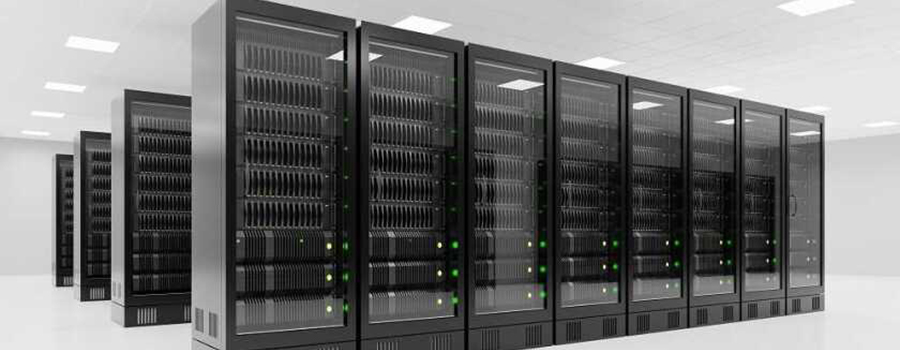
Differences Between Rack Cabinet and Server Cabinet
In the world of technology, the two basic components at the heart of data centers and server rooms are rack cabinets and server cabinets. So, what is the difference between these two terms? Which cabinet should you choose in which situation? Here are the answers to these questions:
What is a Rack Cabinet?
Rack cabinets are cabinets that are usually 19 inches wide and have different heights, designed to accommodate and organize various electronic devices. These cabinets can accommodate servers, network devices, storage units, power distribution units and other equipment. The general features of rack cabinets are as follows:
Flexibility and Versatility: Provides flexibility to accommodate various types of devices. Servers, switches, routers and more can coexist.
Standard Dimensions: 19 inches wide is the industry standard and increases the compatibility of devices. Height is measured in “U” units.
Cable Management: Minimizes clutter and provides order with comprehensive cable management options.
Cooling Solutions: Offers a wide range of cooling management for different cooling needs of different devices.
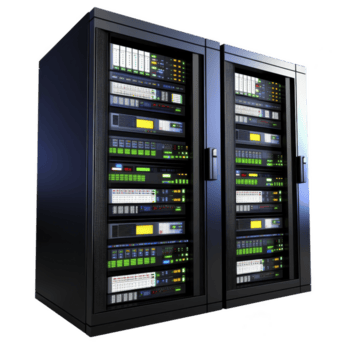
Environmental set
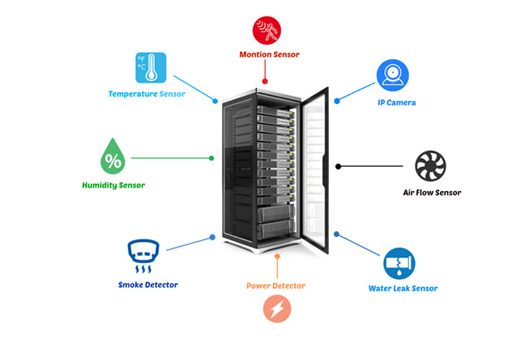
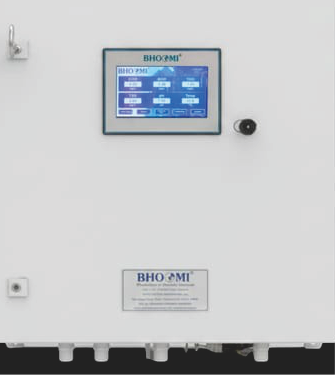
Environmental Monitoring for Data Center
Environmental monitoring gives information to data center personnel regarding the condition of the whole facility. It does not matter how small a data center is. The facility has to remain online 24/7.
Environmental monitoring provides real-time access to the temperature, humidity, and other environmental stats of the data center. The data logged on the system can be accessed at all times. In addition to real-time, historical data allows analysis of trends and diagnosis of problems.
Environmental monitoring systems send real-time alerts to the operator if sensor parameters are outside of defined thresholds. The data center environment is highly sensitive. A small temperature change can be a severe threat to the equipment and requires immediate action. With environmental monitoring sensors in place, data centers can prevent damage and financial loss.
Installing a wireless environmental monitoring system is not as complicated as it is useful. Wireless technologies other than WiFi are available, which provide enhanced security. Wireless radio such as LoRa does not even touch the main IP network
binets can accommodate servers, network devices, storage units, power distribution units and other equipment. The general features of rack cabinets are as follows:
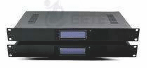
Fiber Optic Module
Common Form Factors and Types
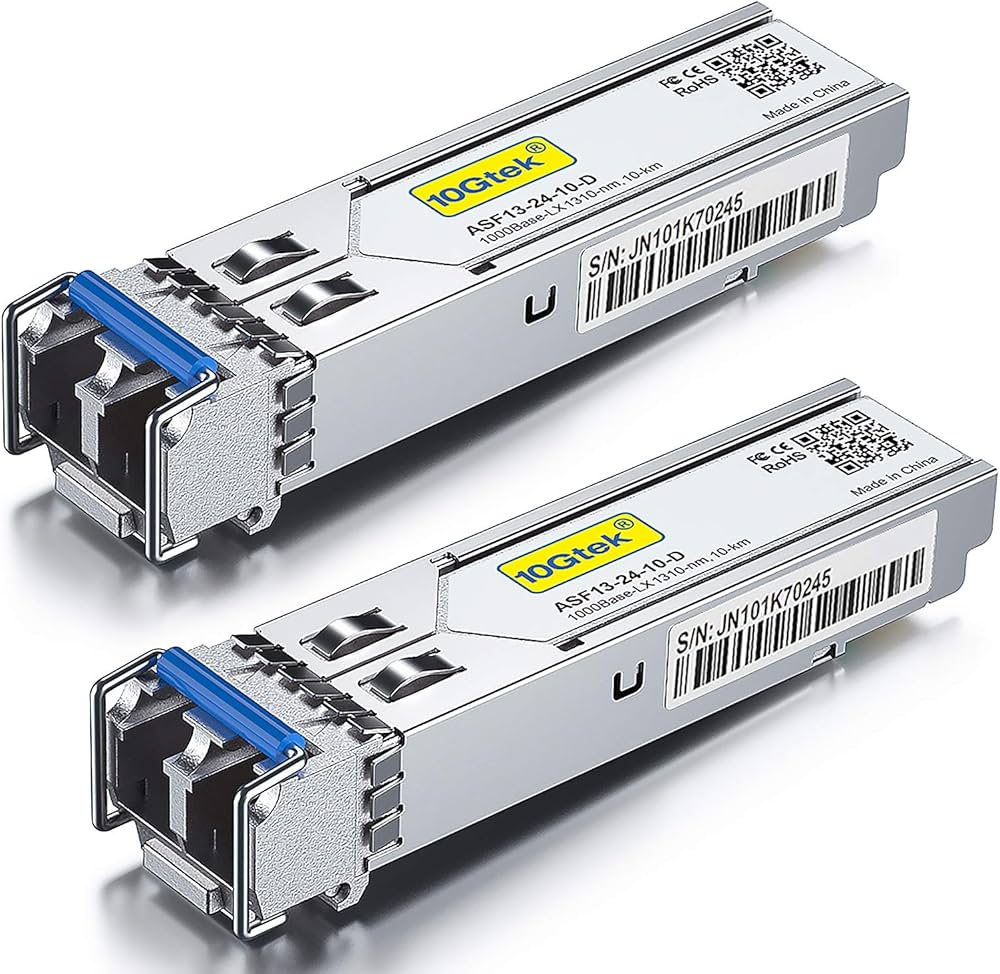
A fiber optic module, also known as an optical transceiver, is a hot-pluggable device that converts electrical signals into optical signals, and vice versa, to enable high-speed data transmission over fiber optic cables. They are essential components in networking equipment like switches, routers, and servers in data centers and telecommunication networks.
Fiber optic modules come in various standard form factors defined by Multi-Source Agreements (MSA) to ensure compatibility across different manufacturers’ equipment.
- SFP (Small Form-factor Pluggable): The most widely used and compact type, supporting data rates up to 1 Gbps.
- SFP+ (Enhanced Small Form-factor Pluggable): Similar in size to SFP but supports higher speeds, typically up to 10 Gbps.
- SFP28: An enhanced version of SFP+ that supports a single-channel speed of 25 Gbps.
- QSFP+ (Quad Small Form-factor Pluggable): Supports four channels of data for a combined speed of up to 40 Gbps.
- QSFP28: An advanced version of QSFP+ that supports speeds up to 100 Gbps, typically as four 25 Gbps lanes.
- CFP, CFP2, CFP4: Larger form factors designed for very high-speed networks, such as 100G Ethernet, supporting data rates from 40 Gbps to 400 Gbps.
Power Distributor Unit
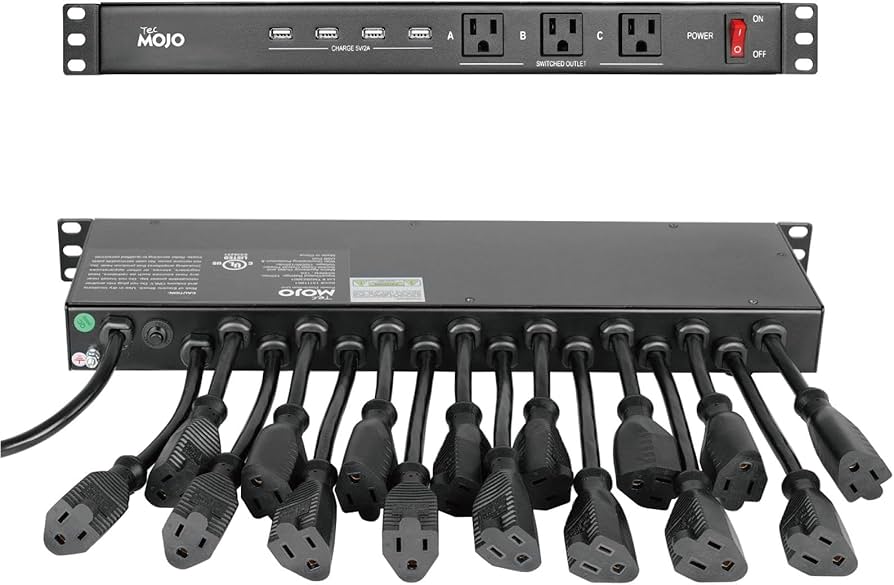
Power Distribution Units (PDUs): Efficiency and Control in Power Management
A power distribution unit (PDU) for a rack is a crucial component for distributing electrical power to multiple devices within a server rack, with different types offering varying levels of functionality from basic power strips to advanced, network-managed solutions.
Types of Rack PDUs
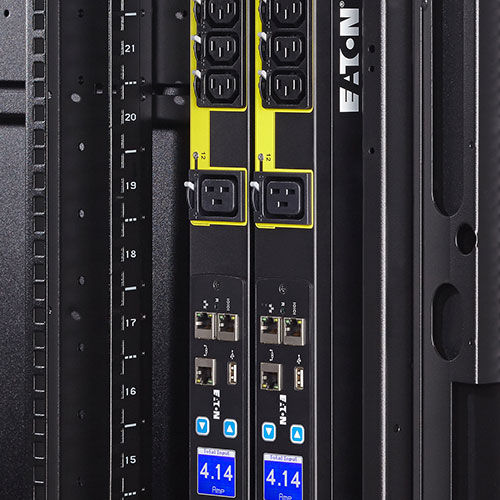
- Basic Rack PDU: These are entry-level, cost-effective solutions that simply provide a means of distributing power to multiple outlets and lack any monitoring or remote management capabilities. They are ideal for smaller offices or less complex A/V setups.
- Metered Rack PDU: These units include a local digital display or input-level monitoring that provides real-time feedback on power usage at the unit’s input. This helps users track energy consumption, prevent overloads, and manage power usage locally.
- Monitored Rack PDU (Intelligent PDU): Building on metered units, these PDUs offer remote monitoring of power usage via a network interface. They can provide detailed data and alarms to help IT teams proactively manage power consumption and prevent overloads, which is ideal for data centers.
- Switched Rack PDU (Intelligent PDU): These advanced units provide the ability to remotely manage and control power to individual outlets, including the ability to turn outlets on/off or power cycle locked-up equipment. This feature is invaluable for remote management and troubleshooting, reducing the need for on-site technicians.
- Switched Metered-by-Outlet Rack PDU: These are the most feature-rich, combining remote outlet switching with granular, outlet-level power monitoring for maximum control and efficiency in critical infrastructure environments.
- Automatic Transfer Switch (ATS) PDU: These units have an integrated ATS that provides power redundancy by automatically switching between two power sources (e.g., a primary UPS and a backup generator) if one source fails, ensuring continuous operation.
KVM Switch
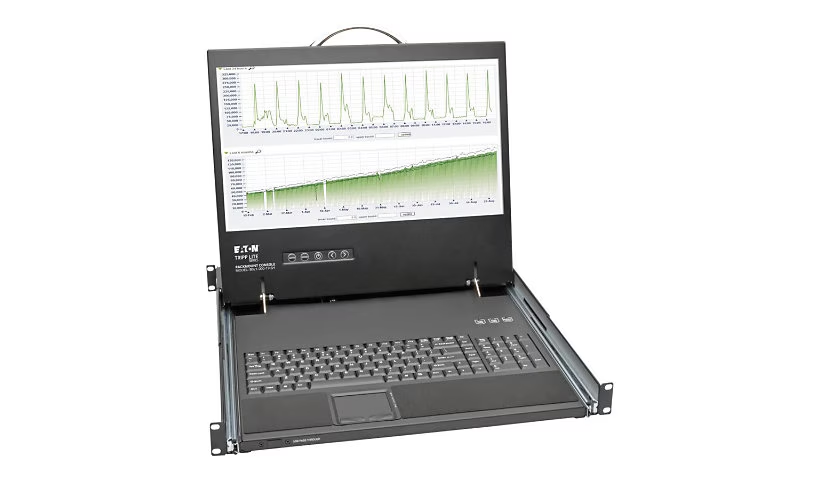
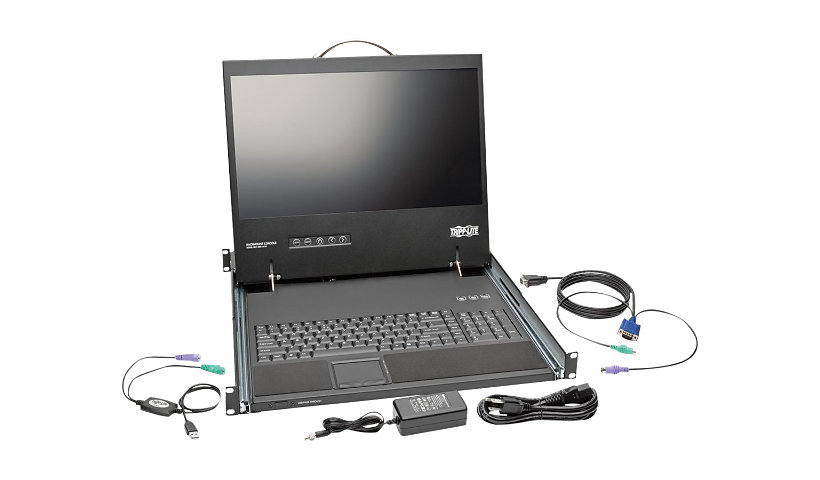
Tripp Lite’s B021-000-19-SH 1U Rackmount Console is the ideal solution for specialized vehicle projects, including rescue services and military specific applications. It can be mounted in as little as a 19″ deep rack and features an integrated 19″ LCD display, full 104-key keyboard and touch pad, all in a 1U rackmountable housing. This console is designed for use with a server or a KVM switch with PS/2 or USB console connectors. Tripp Lite warrants its products to be free from defects in materials and workmanship for a period of one (1) year from the date of initial purchase.
– Short-depth console mounts in cabinets with a minimum depth of 19″
– Designed for use with KVMs or Servers that have PS/2 or USB connectors
– 19″ LCD Screen with 1024 x 768 resolution
– 100-240V Auto Sensing External Power Supply
Key Buying Points
-Mounts in 19″ to 30″ deep cabinets
-Full 19″ LCD display screen, 104-key keyboard, touchpad
-Max resolution of 1024 x 768
-100-240V Auto Sensing External AC Adapter, 6-ft.
-Includes Console-to-KVM 6-ft. cable kit for use with PS/2 or USB KVMs or Servers
– Single rail, ball bearing slides
– One-Year Warranty
Typical Applications
– Specialized mobile cabinets, 19″ – 30″ depth
Package Includes
– 1U 19″ KVM Console Short-Body
– External AC Power Adapter
– Console-to-KVM Switch Cable
– Owner’s Manual
Complete Specifications
Description: 1U 19″ KVM Console Short-Body
Length: 1.75″ (H) x 17.25″ (W) x 19″ (D)
Color: Black
Style: Short-Depth 1U Rackmount Console with 19″ LCD
PC/Server: VGA, PS/2 and USB
Connectors – Connector A: HD15 (Female)